

What Is Voltage Monitoring in Public and Industrial Energy Grids and How Does It Work?
Definition of Voltage Monitoring
Voltage monitoring refers to the continuous monitoring of the voltage in electrical networks to ensure that it is within defined tolerance limits. The official definition according to the DIN VDE 0108-100 standard is: “Voltage monitoring is the continuous monitoring of the voltage in electrical networks in order to detect deviations from the specified limit values and to take appropriate protective measures.” According to the definition of the VDE standard, voltage monitoring serves to “guarantee the quality and stability of the power supply and ensure the protection of electrical devices and systems”. This monitoring is crucial for the safe and efficient operation of electrical systems.
Necessity of Voltage Monitoring
Voltage monitoring is necessary in both public and industrial energy grids to ensure their operational safety and efficiency. In public energy grids, grid monitoring ensures that households, public facilities and large consumers are reliably supplied with electricity. In industrial energy grids, especially for machines and systems, voltage monitoring is crucial for trouble-free and economical operation. Phase monitoring plays an important role here to ensure that all phases are loaded evenly and that no phase imbalances occur.
Risks and Disadvantages Without Voltage Monitoring
Without voltage monitoring, various risks and disadvantages can occur:
- Overloading of devices: Electric motors and other electrical devices can be overloaded by undervoltage, resulting in damage or premature wear.
- Destruction due to overvoltage: Devices can be damaged or destroyed by overvoltage, for example due to faulty regulation of generators in stand-alone operation.
- Interruptions during operation: A lack of voltage monitoring can lead to unplanned outages and interruptions, resulting in high costs and productivity losses, particularly in industrial processes.
Results and Recommendations for Action From the Analysis/Measurement
Analysing and measuring the voltage monitoring can provide various results:
- Normal voltage: No action required as the voltage is within the acceptable & standard-compliant limits.
- Undervoltage and overvoltage: In the event of undervoltage, measures such as load reduction or switching off non-critical loads can be recommended to temporarily stabilise the voltage. Measures against overvoltage can be the use of overvoltage protection devices or adaptation of generator controls. In the area of low voltage in the distribution grid, the »LVRSys® low voltage control system« offers a flexible solution for voltage stability problems and is used by customers worldwide as an economical and quickly available alternative to line extensions. Click here for more information.
- Phase imbalance: May indicate uneven load distribution and may require load redistribution or phase correction.
Difference Between Undervoltage Monitoring and Overvoltage Monitoring
Undervoltage monitoring refers to the detection of voltage fluctuations that are below the specified level. Overvoltage monitoring, on the other hand, detects voltage fluctuations that are above the specified level. Both serve the purpose of keeping the voltage within the standard-compliant voltage tolerance and thus ensuring security of supply for energy supply companies and their consumers. Continuous voltage monitoring with our permanently installed PQ grid analysers also offers energy supply companies and large consumers such as industrial companies the possibility of monitoring and recording the reference qualities or quality agreements on voltage quality between energy suppliers and customers and making them available for evaluation or storage. The modern and highly accurate power quality measuring devices from A. Eberle are certified as “Class A” measuring devices in accordance with the IEC 61000-4-30 Ed. 3 standard. This standard defines suitable measurement technology and measurement methods in order to create comparable and reproducible measurement results. Measurement data from Class A measuring devices is also referred to as “court-proof”, as they have very high measurement accuracy and EMC (electromagnetic compatibility) and only measure what actually takes place in the network.
Voltage Monitoring for Different Voltage Levels
- Voltage monitoring 12V: Is often used in control circuits and DC control circuits. It protects against undervoltage and overvoltage in order to protect sensitive electronics.
- Voltage monitoring 24V: Similar to 12V systems, but often used in industrial control and automation systems.
- Voltage monitoring 230V: Relevant for household appliances and single-phase industrial applications. Here, monitoring protects against voltage fluctuations in the public grid.
- Voltage monitoring 400V (3-phase): Important in three-phase industrial grids. Monitors all three phases in a three-phase network. This is crucial for recognising and correcting phase imbalances. Ensures that machines and systems can be operated stably and safely.
Adjustable Voltage Monitoring
Adjustable voltage monitoring makes it possible to flexibly adapt the monitoring limits to the specific requirements of the respective system. This is particularly useful in complex industrial environments where different devices and machines have different voltage requirements. Therefore, adjustable voltage monitoring offers the possibility to configure individual protection mechanisms for different applications and thus achieve higher reliability and efficiency of phase monitoring and grid monitoring.
Phase Monitoring
Phase monitoring involves monitoring the voltage and phase position in three-phase systems. This ensures that all phases are in balance and thus prevents damage caused by phase loss or imbalance. Effective 3-phase grid monitoring is crucial to ensure the stability and efficiency of complex industrial networks.
Grid Monitoring in Accordance With DIN VDE 0126-1-1
Grid monitoring in accordance with DIN VDE 0126-1-1 ensures that both public and industrial energy networks operate safely, reliably and efficiently by continuously monitoring the voltage and phase position and activating protective measures if necessary.
Voltage Monitoring in a Nutshell
Voltage monitoring is an essential part of the energy supply, both in public and industrial grids. It ensures the safe and efficient operation of devices and systems and protects against the risks and disadvantages of voltage deviations. Monitoring can be applied to different voltage levels and phases to ensure comprehensive grid monitoring. Compliance with the relevant standards, such as DIN VDE 0126-1-1, is of great importance to ensure the safety and reliability of the power supply.
Which Measuring Devices Are Needed for Voltage Monitoring?
Functions of Measuring Devices for Voltage Monitoring
Voltage monitoring measuring devices must fulfil various essential functions in order to ensure effective and reliable voltage monitoring in energy networks. Here are the most important functions in detail:
- Overvoltage and undervoltage monitoring: This is a core function that ensures that the voltage remains within predefined limit values. A voltage monitoring relay reacts to deviations and protects the connected devices from damage caused by overvoltage or undervoltage. Undervoltage relays and overvoltage relays ensure that devices are protected against undervoltage (e.g. 12V undervoltage relays, 24V undervoltage relays, 230V undervoltage relays, 400V undervoltage relays) and overvoltage.
- Phase monitoring: Phase monitoring relays monitor the voltage and phase position in three-phase systems. This is crucial for the balance and correct operation of machines. A 3-phase monitoring relay or a phase monitoring relay 400v ensures that all phases are in balance and that no phases fail.
- Asymmetry monitoring: This function checks the symmetry of the voltages in the phases. Asymmetries can lead to inefficient operation and possible damage.
- Phase sequence monitoring: The phase monitoring relay function ensures that the sequence of the phases is correct, which is essential for the operation of three-phase motors.
- Frequency monitoring: This function monitors the mains frequency and ensures that it remains within the specified range.
- Neutral conductor monitoring: Monitors the voltage in the neutral conductor to ensure that no excessive voltages occur.
- Adjustable threshold values: An adjustable voltage monitor makes it possible to flexibly adapt the monitoring limits to the specific requirements of the respective system.
Important Standards in the Field of Voltage Monitoring
There are various standards and regulations that are relevant to the area of “voltage monitoring”. These standards serve to define and verify the following criteria:
- Quality/compatibility level of voltages and currents in public and industrial energy networks
- Suitability of measuring devices for voltage monitoring and grid analysis
- Suitability of measurement processes for voltage monitoring and power quality analysis
The most important standards are briefly described below:
- DIN EN 61000-2-2 | IEC 61000-2-2: Describes the electromagnetic compatibility (EMC) at the connection point in the public low-voltage network (PCC). Compatibility levels up to 150kHz are specified here.
- DIN EN 61000-2-4; Class 1 / 2a / 2b / 3 | IEC 61000-2-4; Class 1 / 2a / 2b / 3: To be applied to system-internal connection points (IPC) in low and medium voltage networks up to 35kV.
- DIN EN 61000-2-12 | IEC 61000-2-12: In line with IEC 61000-2-2, this standard is used in the public medium-voltage network.
- DIN EN 50160: Describes the characteristics of power quality in public grids from the low-voltage level to the high-voltage level.
- IEEE 519: Deals with the limit values for harmonic currents and voltages in electrical supply networks. Application (USA, Asia, Arab states).
The IEC61000-2-x standardisation group deals exclusively with compatibility levels for voltages. Limit values for currents are not defined here.
- DIN EN 61000-3-2 | IEC 61000-3-2: Defines limit values for current harmonics for devices up to 16A.
- DIN EN IEC 61000-3-12 | IEC 61000-3-12: Defines limits for current harmonics for devices >16A to <75A.
- DIN EN 61000-3-3 | IEC 61000-3-3: Defines limits for voltage change and flicker.
- DIN EN 61000-3-X | IEC 61000-3-X: …many more standards available in this area
The IEC61000-3-x standardisation group deals exclusively with compatibility levels for the currents of devices/systems. There are no limit values for voltages here.
- DIN en 61000-4-30 Class a Ed. | IEC 61000-4-30 Class a Ed. 3 (Test Standard for Power Quality Measuring Devices): This standard defines the requirements for power quality measuring devices. Class A measuring devices must provide precise and reproducible measurements that can be used for comparative analyses and for compliance with legal regulations. The standard specifies the measurement methods for parameters such as power quality, frequency, flicker and harmonics.
- DIN EN 61000-4-4 | IEC 61000-4-4: Defines the immunity to fast transient disturbances – bursts.
- DIN EN 61000-4-7 | IEC 61000-4-7: Describes suitable methods for measuring harmonics and interharmonics in supply networks.
- DIN EN 61000-4-15 | IEC 61000-4-15: Defines the methods for measuring flicker in electrical supply networks. Voltage monitoring devices must perform flicker measurements in order to evaluate mains fluctuations.
- DIN EN 61000-4-X | IEC 61000-4-X: There are many other standards for immunity. This standardisation group deals with the immunity of devices and specifies test standards.
Other important related standards for power quality measuring devices for voltage monitoring
- DIN EN 62586-1 | IEC 62586-1: Specifies product characteristics and performance requirements for measuring devices whose functions are to measure, record and, where applicable, monitor power quality parameters in supply networks.
- DIN EN 62586-2 | IEC 62586-2: Specifies the test methods for Class A and Class S power quality devices according to IEC61000-4-30
These standards and regulations ensure that voltage can be assessed reliably and comparably and that monitoring devices fulfil the necessary requirements for safety, reliability and performance. Compliance with these standards is crucial for ensuring a stable and safe energy supply in public and industrial energy networks.
Voltage Monitoring With Devices From A. Eberle
Comprehensive voltage monitoring can be carried out with the mobile power quality analysers from the »PQ-Box family« as well as with the permanently installed power quality measuring devices & fault recorders from the »PQSys« product range from A. Eberle. A. Eberle offers a comprehensive selection of measuring devices that have been specially developed for voltage monitoring and analysing power quality and are proven and used worldwide.
A. Eberle Measuring Devices for Voltage Monitoring
PQMobil – Our Portable Power Quality Analysers for Measuring Power Quality Deep in the Grid
Extremely Robust and Reliable
The PQ-Box family consists of high-performance, portable power quality analysers, frequency analysers, power meters and transient recorders for voltage monitoring and power quality measurement.
User-friendliness and practical use were the main focus during development. The devices are equipped with a wide range of trigger options to quickly localise the source of network faults.
All mobile power quality analysers meet the high protection class IP65 and can also be installed and operated outdoors. The PQ boxes also have a very wide temperature range from – 20°C to + 60°C.
They also fulfil all the requirements of the IEC61000-4-30 Ed.3, IEC62586-1 and IEC62586-2 Ed.2 measurement device standards for Class A devices.
Lastganganalyse, Energieerfassung & Netzanalyse mit einem Gerät


PQSys – Our Permanently Installed Power Quality Grid Analysers and Fault Recorders
A Reliable Overview of Supply Quality and Grid Faults – Fully Automatic and at Every Voltage Level
The permanently installed fault recorders and power quality network analysers PQI-DA smart, PQI-DE and PQI-D are the central components in a system that can be used to solve all measurement tasks in a low, medium and high-voltage network. The analysers can be used as fault recorders with a sampling rate of up to 41 kHz, as power quality measuring devices in accordance with EN50160 / IEC 61000-2-2/4 or as power analysers.
Above all, the components are suitable for monitoring and recording special reference qualities or quality agreements between the energy supplier and its customer and making them available for evaluation or storage.
Modern power quality analysers work in accordance with the IEC 61000-4-30 Ed. 3 standard, which defines measurement methods to create a comparable basis for the user.


Power Quality Services – Power Quality Analysis & Troubleshooting as a Service Directly From the Manufacturer
We Support You With Our Many Years of Experience and Expertise in Your Grid Analysis
As a renowned manufacturer of mobile high-end grid analysers and the leading provider of permanently installed power quality measurement devices in Germany, we have technical expertise, many years of experience and advanced measurement technology.
We are at your side as a reliable and competent partner for all challenges in the field of power grid analysis. From the project definition to the final report. For more information on our power quality services, please click here to find out how we can best support you:
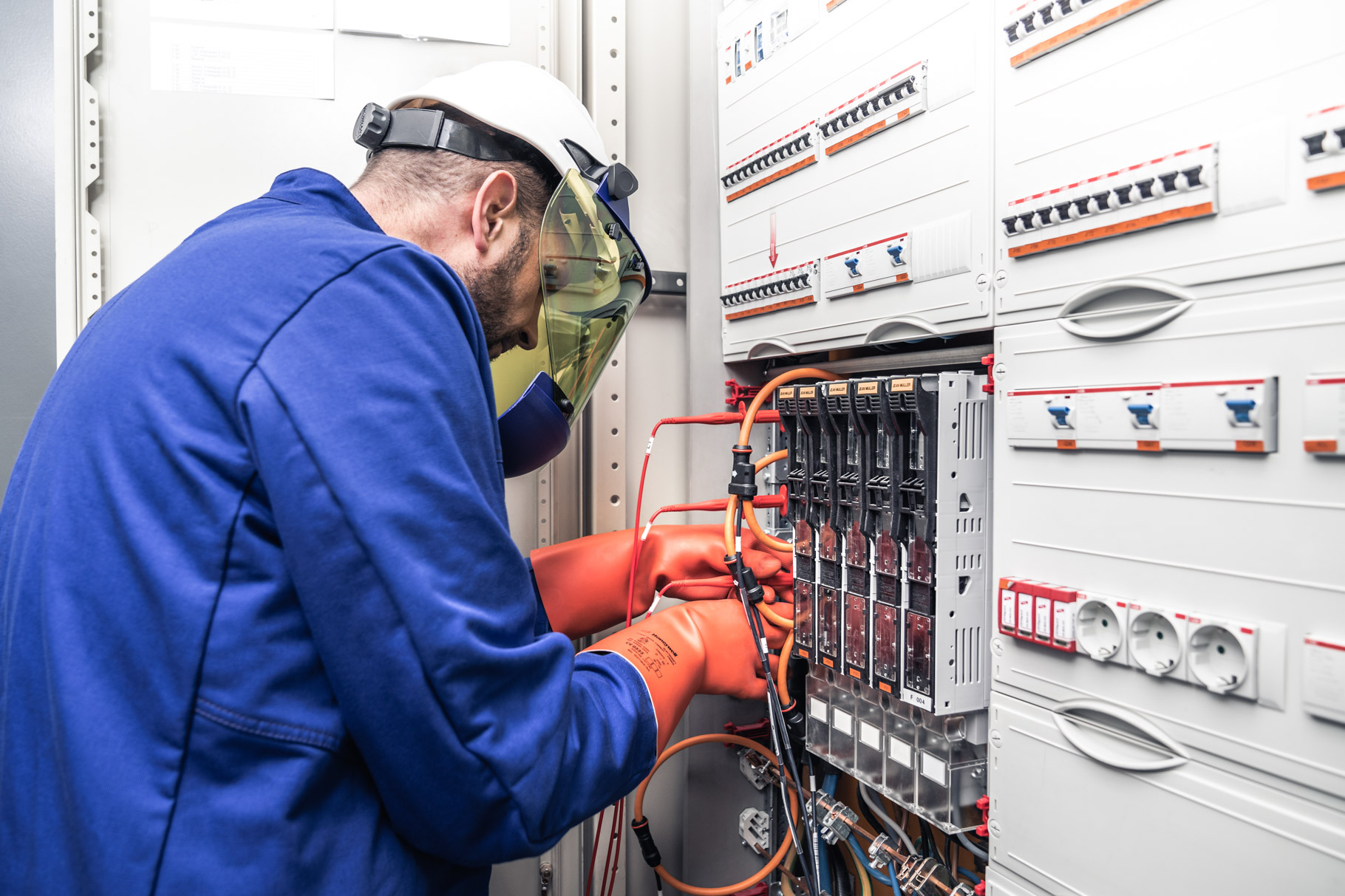
Power Quality Services
Expert Knowledge That Gets You Ahead
We offer you power quality audits with troubleshooting in accordance with EN 50160 and IEC 61000 and support you with our expert know-how. As an internationally recognised manufacturer in the field of premium portable power quality analysers, we can draw on a wide range of power network analysers with the appropriate accessories for your measurement projects.
Do You Have Any Further Questions About
Voltage Monitoring or Our Products?
Contact Us Here!
Get in Touch Now


